Schools & Cost
Skills You Gain in Dental Assistant Training (and Why Offices Care)
The clinical, technical and people skills a good dental assisting program teaches, which ones Colorado employers look for first, and how hands-on practice builds them.
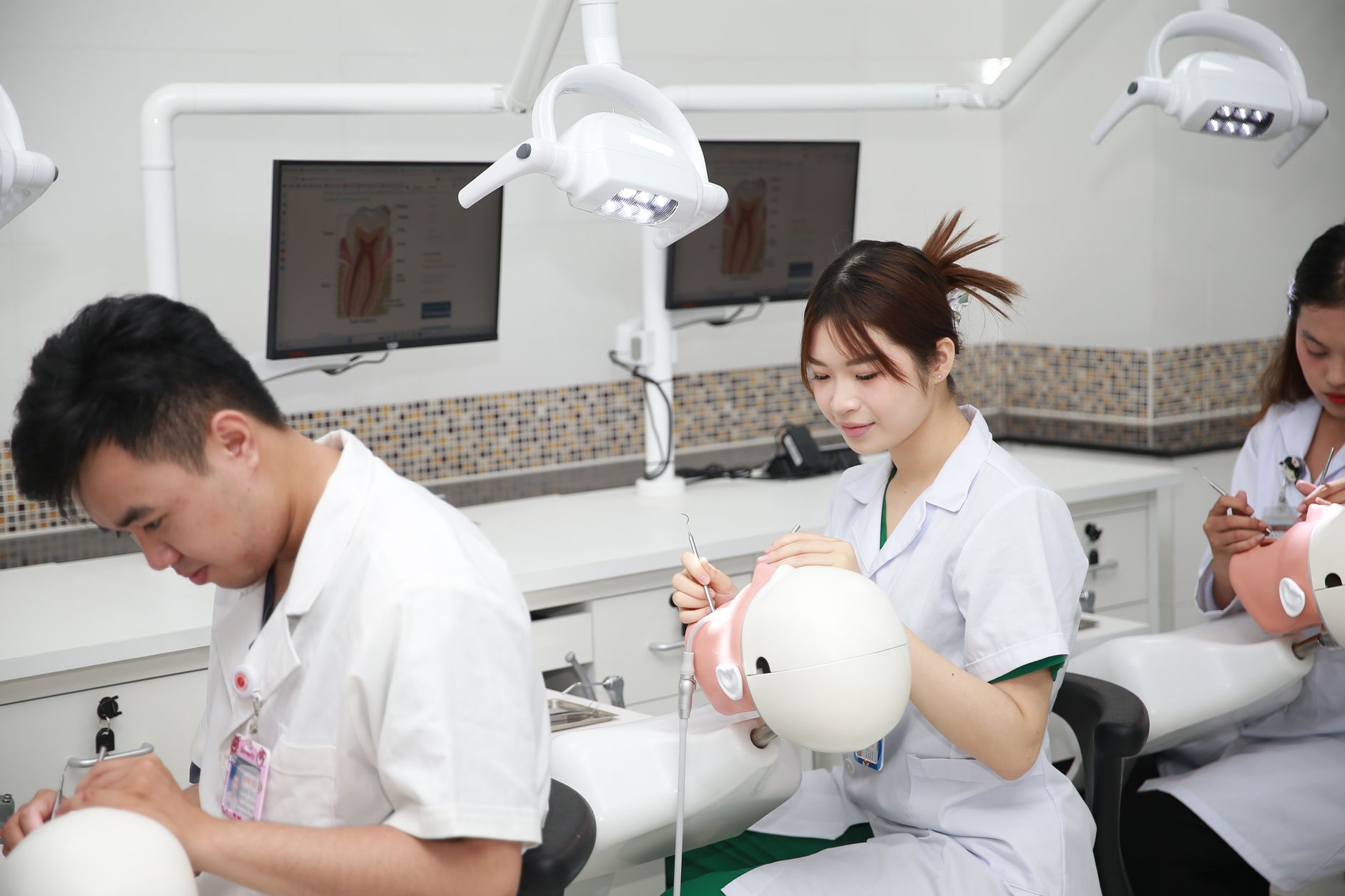
Most dental assisting programs cover the same topics on paper. What sets good ones apart is whether you leave able to do things, not just name them. Here's what training should give you, and which of those skills Colorado offices look for first.
Clinical skills
Chairside assisting (four-handed dentistry). The core of the job. You learn where to sit, how to pass and receive instruments, how to keep the field dry and visible with suction, and how to anticipate each step of common procedures. It sounds simple, but it takes a lot of repetition to get smooth.
Infection control and sterilization. Cleaning, packaging and sterilizing instruments, monitoring sterilizers, handling barriers and disinfecting surfaces, managing sharps and waste. The DANB ICE exam covers this (DANB in Colorado).
Radiography. Positioning sensors or film, exposure settings, patient safety, and recognizing a diagnostic image versus a retake. In Colorado you need approved training before taking x-rays on patients (the routes), so a program that includes radiography is a big head start.
Impressions and scans. Alginate impressions, bite registrations and, increasingly, digital intraoral scans (dental tech).
Materials. Mixing and handling cements, bonding agents, temporary materials and impression materials, with the right timing and consistency.
Patient care basics. Health histories, vital signs, recognizing medical emergencies, CPR, and giving post-op instructions.
Technical skills
Dental offices run on software and digital equipment. Training should at least expose you to:
- Practice management software (scheduling, charting, treatment notes)
- Digital x-ray sensors and imaging software
- Intraoral cameras and, in some offices, scanners
- Basic dental charting and terminology
You won't master every brand, since every office uses a different combination. Knowing the concepts means a new system takes days to learn, not weeks.
People skills
This is where good assistants really stand out:
- Calming anxious patients. Explaining what's happening, noticing discomfort, being a steady presence. More on patient rapport.
- Clear communication. With the dentist during a procedure (often without words), with the front desk about scheduling, and with patients about aftercare.
- Teamwork under time pressure. Room turnover, emergencies and running behind all need calm coordination.
- Professionalism. Patient privacy, showing up on time and following protocol every time.
Why hands-on practice matters so much
You can memorize every instrument name from a book. You can't learn to pass a mirror and explorer smoothly while holding the suction from a book. Hand skills come from repetition with feedback.
When you compare programs, ask how much time you'll spend practicing on typodonts, on classmates and on real patients, and whether that's supervised by experienced clinicians. Why live-patient training helps.
What employers check first
When Colorado offices hire a new assistant, the conversation usually comes down to three questions:
- Can you take x-rays? If yes, you save the office weeks of training.
- Do you know infection control? Nobody gets to cut corners here.
- Will patients like you and can the team rely on you? They'll judge this in the interview and, often, a working interview.
A program that covers all three sets you up well. Compare Colorado programs, or use the 60-second program match to see which fit your schedule.
Checked September 30, 2026.
FAQ
What skills do you need to be a dental assistant?
Clinical skills (chairside assisting, infection control, radiography, impressions), technical skills (practice software, digital sensors and scanners), and people skills (calming patients, clear communication, teamwork).
What skill do dental offices value most in new assistants?
In Colorado, being qualified to take x-rays is one of the most useful things a new assistant can offer. Reliable infection control and good chairside manner come right after.
Can you learn dental assisting skills online?
The theory, yes. The hand skills, no. Chairside assisting, instrument handling and x-ray technique need supervised hands-on practice, which is why hybrid programs still include in-person training.